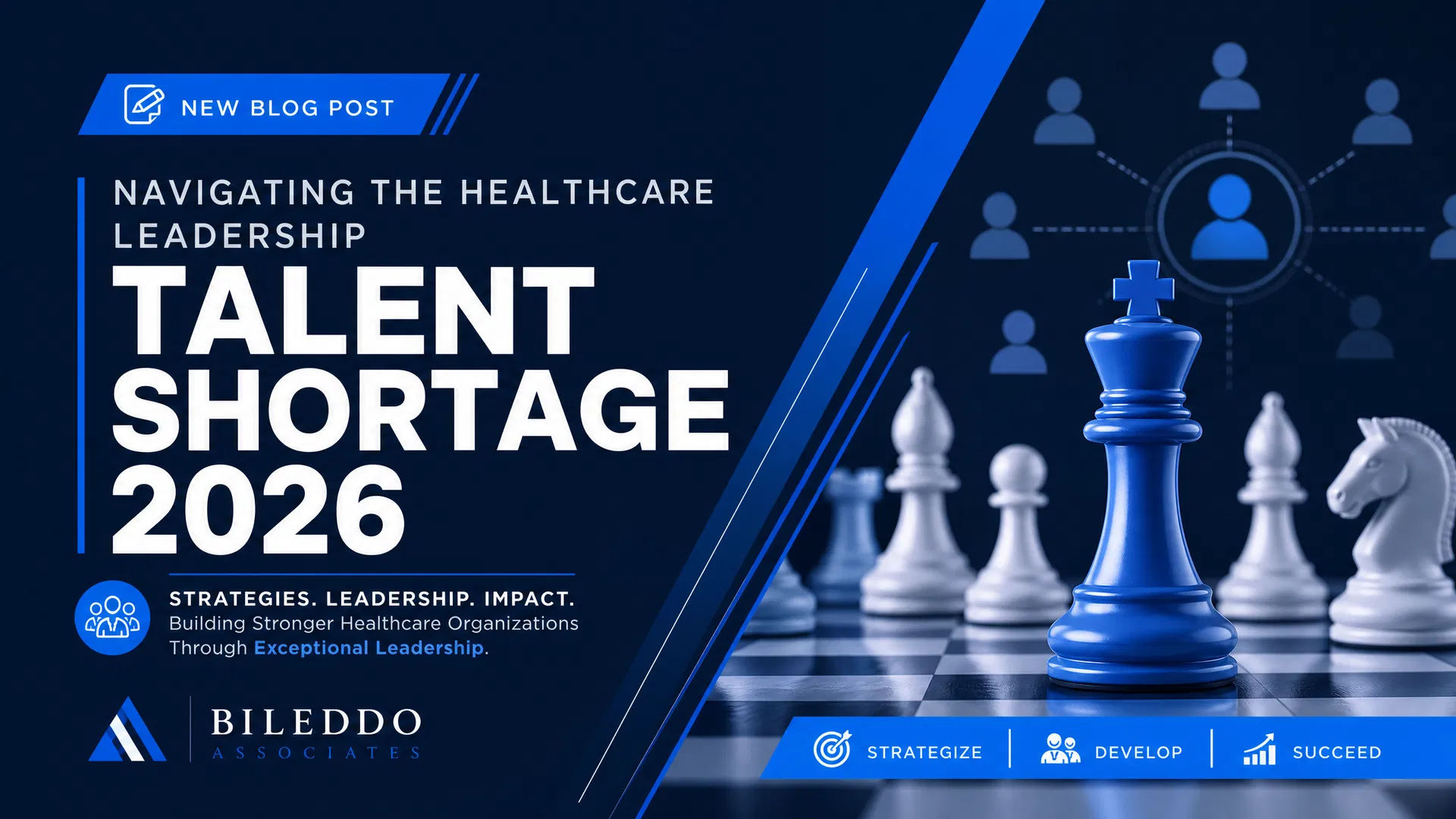
Navigating the Healthcare Leadership Talent Shortage 2026: Strategies for Executive Recruitment
The healthcare landscape is in constant flux, driven by technological advancements, evolving patient demographics, and an increasingly complex regulatory environment. Amidst these changes, a critical challenge is emerging that threatens to destabilize even the most robust healthcare systems: the projected healthcare leadership talent shortage 2026. At Bileddo Associates, a Forbes America's Best Executive Recruiting Firm specializing exclusively in healthcare leadership search, we are at the forefront of understanding and addressing this impending crisis. Our expertise in CNO, CMO, VP Nursing, and Director-level placements positions us uniquely to guide organizations through these turbulent waters.
The Looming Crisis: Understanding the Healthcare Leadership Talent Shortage 2026
The year 2026 is not far off, and the indicators for a severe shortage of qualified healthcare leaders are stark. Several converging factors are contributing to this perfect storm:
- Mass Retirements of Baby Boomers: A significant portion of current healthcare leadership is nearing retirement age. According to a study by the American College of Healthcare Executives (ACHE), nearly 20% of hospital CEOs plan to retire within the next five years. This exodus will leave a vast void in institutional knowledge and strategic direction.
- Burnout and Turnover: The relentless pressures of the past few years, particularly exacerbated by the global pandemic, have led to unprecedented levels of burnout among healthcare executives. A recent survey by the American Medical Association found that 62.8% of physicians reported at least one symptom of burnout in 2021, a figure that extends to leadership roles. This burnout fuels turnover, further depleting the talent pool.
- Increased Demand for Specialized Skills: The healthcare industry's evolution demands leaders with increasingly specialized skill sets in areas like digital transformation, population health management, value-based care, and data analytics. Traditional leadership development pipelines often struggle to keep pace with these emerging requirements.
- Inadequate Succession Planning: Many healthcare organizations, particularly smaller community hospitals, lack robust succession planning programs. When a key leader departs, there isn't a readily available internal candidate prepared to step into the role, leading to prolonged vacancies and reliance on external searches.
- Competition from Other Industries: High-performing leaders with strong operational and strategic acumen are increasingly sought after by other industries, offering competitive compensation and work-life balance that healthcare sometimes struggles to match.
Consider a scenario at a hypothetical institution like 'Metropolitan General Hospital.' Their Chief Nursing Officer, a veteran with 30 years of experience, is set to retire. Without a clear successor identified and groomed, the hospital faces a critical leadership gap in a role vital for patient care quality and staff morale. This is not an isolated incident; it's a systemic challenge that will intensify by 2026.
The Impact: Why This Shortage Matters
The implications of the healthcare leadership talent shortage 2026 are far-reaching and potentially devastating:
- Compromised Patient Care: Effective leadership is directly linked to patient outcomes, safety, and satisfaction. A vacuum at the top can lead to operational inefficiencies, decreased quality of care, and increased medical errors.
- Financial Instability: Leadership vacancies can result in significant financial losses due to decreased productivity, increased recruitment costs, and potential regulatory penalties. For example, a prolonged CMO vacancy at 'Coastal University Medical Center' could delay critical clinical trials and impact research funding.
- Employee Morale and Retention: A lack of stable, visionary leadership can demoralize staff, leading to higher turnover rates among frontline workers and further exacerbating staffing crises.
- Stifled Innovation: Without strong leaders to champion new initiatives and adapt to industry changes, healthcare organizations risk falling behind, unable to implement necessary reforms or embrace new technologies.
- Loss of Institutional Knowledge: The departure of experienced leaders means the loss of invaluable organizational memory, relationships, and strategic insights that are difficult to replace.
Bileddo Associates: Your Strategic Partner in Executive Recruitment
At Bileddo Associates, we don't just fill positions; we build leadership teams that drive success. Recognizing the severity of the healthcare leadership talent shortage 2026, our approach is proactive, strategic, and deeply rooted in our understanding of the unique demands of healthcare executive roles. We specialize in identifying and attracting top-tier talent for critical positions such as CNO, CMO, VP Nursing, and various Director-level roles.
Our Proven Methodology:
- Deep Industry Specialization: Unlike generalist firms, our singular focus on healthcare means we speak your language. We understand the nuances of clinical operations, regulatory compliance, and the specific challenges faced by hospitals, health systems, and academic medical centers. This allows us to quickly grasp the unique requirements of each search.
- Extensive Network: Over decades, we have cultivated an unparalleled network of proven healthcare leaders. Our relationships extend across the nation, giving us access to passive candidates who are not actively seeking new roles but possess the exact experience and leadership qualities your organization needs. Explore our employers section to see how we partner with leading institutions.
- Rigorous Vetting Process: Our comprehensive assessment process goes beyond resumes. We evaluate candidates not just on their credentials but on their leadership style, cultural fit, strategic vision, and ability to navigate complex healthcare environments. We understand that a successful CNO, for example, needs not only clinical expertise but also exceptional communication and team-building skills.
- Market Intelligence and Compensation Expertise: We provide our clients with up-to-date market intelligence on compensation trends and talent availability, ensuring that your offers are competitive and attractive. Our salary guide offers valuable insights into current executive compensation benchmarks.
- Focus on Diversity and Inclusion: We are committed to presenting diverse slates of candidates, recognizing that varied perspectives lead to stronger leadership teams and better patient outcomes.
- Succession Planning Consultation: Beyond immediate placements, we advise organizations on developing robust internal succession plans, helping to mitigate future talent shortages. This includes identifying high-potential internal candidates and developing pathways for their growth.
Actionable Strategies for Hospitals to Combat the Shortage:
To effectively counter the healthcare leadership talent shortage 2026, organizations must adopt a multi-faceted approach:
- Invest in Leadership Development: Create structured programs to identify and nurture emerging leaders within your organization. This could involve mentorship programs, executive coaching, and specialized training in areas like financial management and strategic planning. 'St. Jude's Children's Hospital' has successfully implemented a
READY TO FIND YOUR NEXT LEADER?
Start a healthcare leadership-search discussion or explore the current salary-guide resources.